A slow day in Palma: how to disconnect without leaving the old town
Palma has been a city of passage for centuries. Phoenicians, Romans, Arabs, Catalans: all of them arrived, built and left something behind. What remains today is a layering of civilisations that few Mediterranean cities can match. To walk it slowly is not an aesthetic choice — it is the only way to truly understand it.
Start without an alarm. Or nearly.
The slow pace begins the night before: switch off notifications and let the city wake you in its own time. From the rooftop of Es Princep, the sunrise over the Arab wall and La Seu Cathedral is almost unreal. It is the best alarm clock Palma has to offer.
Head downstairs for a leisurely breakfast. The La Calatrava neighbourhood, home to the hotel, has some of the city's most interesting bakeries and cafés. Can Joan de s'Aigo, founded in 1700 and considered the oldest café in Mallorca, is just a short walk away and offers an ensaimada breakfast that is, in itself, a cultural experience.
The city wall as a stroll, not a monument
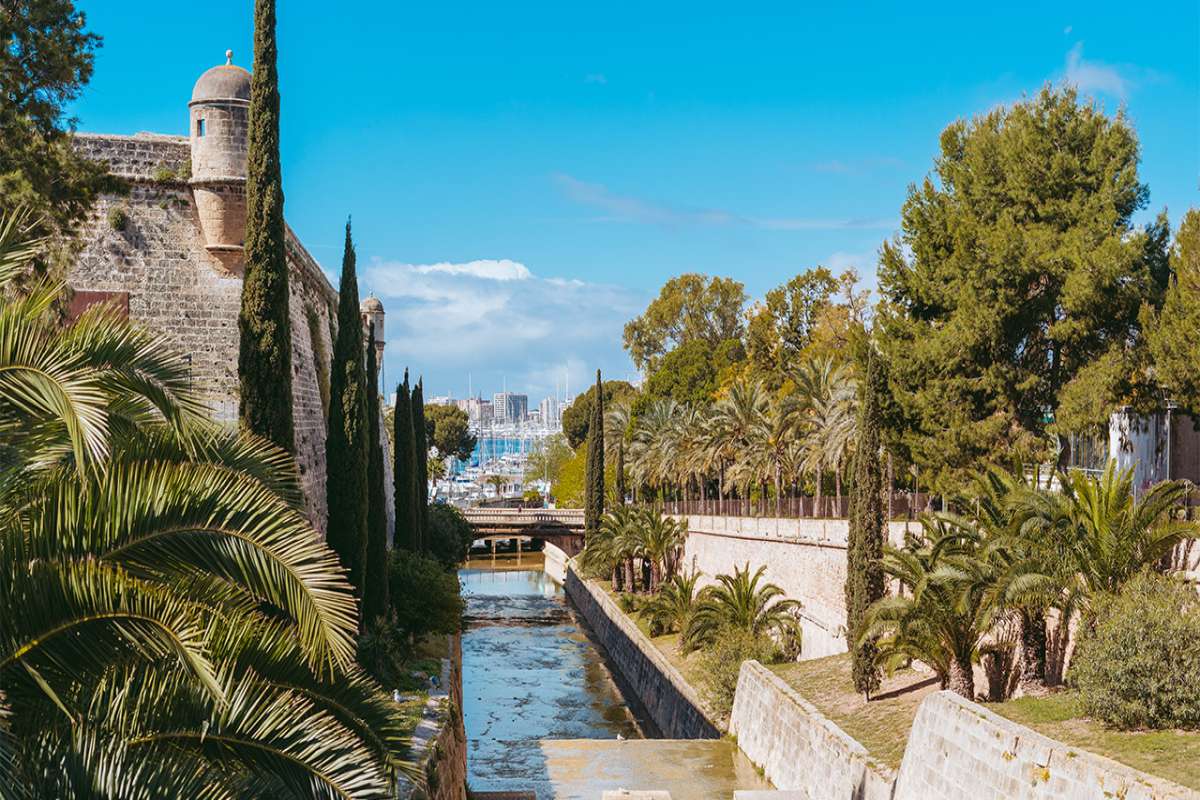
Palma's Renaissance wall has something that sets it apart from other European fortifications: you can walk it, sit on it, live alongside it. The Paseo del Born and the Baluard de Sant Pere are the ideal spot for that slow mid-morning walk where the only goal is to have no goal at all.
If you want a little more historical context, the Museu de Mallorca — five minutes on foot from Es Princep — holds one of the most complete archaeological collections in the Balearic Islands. Very affordable entry and rooms where time seems to stand still.
Lunch without a clock: tapas in the square
Palma's old town concentrates a gastronomic offer that ranges from classic vermut bars to the most creative Mallorcan cuisine. For a slow day, the ideal approach is to skip the big restaurants and head to the bars around Plaça Major or the taverns on Carrer Apuntadors, where time is measured in rounds, not hours.
Pa amb oli — country bread rubbed with tomato and Mallorcan olive oil, served with local cold cuts — is the dish that best embodies the island's slow philosophy. Simple, honest, hard to improve upon.
The afternoon: galleries, courtyards and nothing else
Palma's historic centre has a surprisingly active contemporary art scene. Fundació Miró Mallorca is essential for anyone wanting to understand the relationship between the artist and the island. But there is something equally rewarding in browsing the smaller galleries of the Santa Catalina neighbourhood or the Borne, where entry is free and the art is accessible.
The old town's inner courtyards are another secret that locals guard quietly. Some 16th and 17th-century noble buildings preserve interior patios with century-old palm trees that can be glimpsed from the street or, if you are lucky, visited during open-door days.
The sunset that gives meaning to it all
The rooftop at Es Princep is more than a terrace with views. It is the point where the slow day closes the circle. The wall from above, the cathedral lit by the setting sun, the sea in the background. Not much needs to be said.
An Aperol, a good book, or simply watching the light shift across the rooftops of the old town. That is, precisely, what disconnecting in Palma looks like.
For an evening that is also yours
If the slow day ends with an appetite for something more, the old town has a nightlife offer that runs from concerts at the Teatre Principal — with a programme blending opera, flamenco and live music — to the quiet terraces of the Paseo de la Rambla. Palma by night, seen from inside the neighbourhood, is an entirely different city.