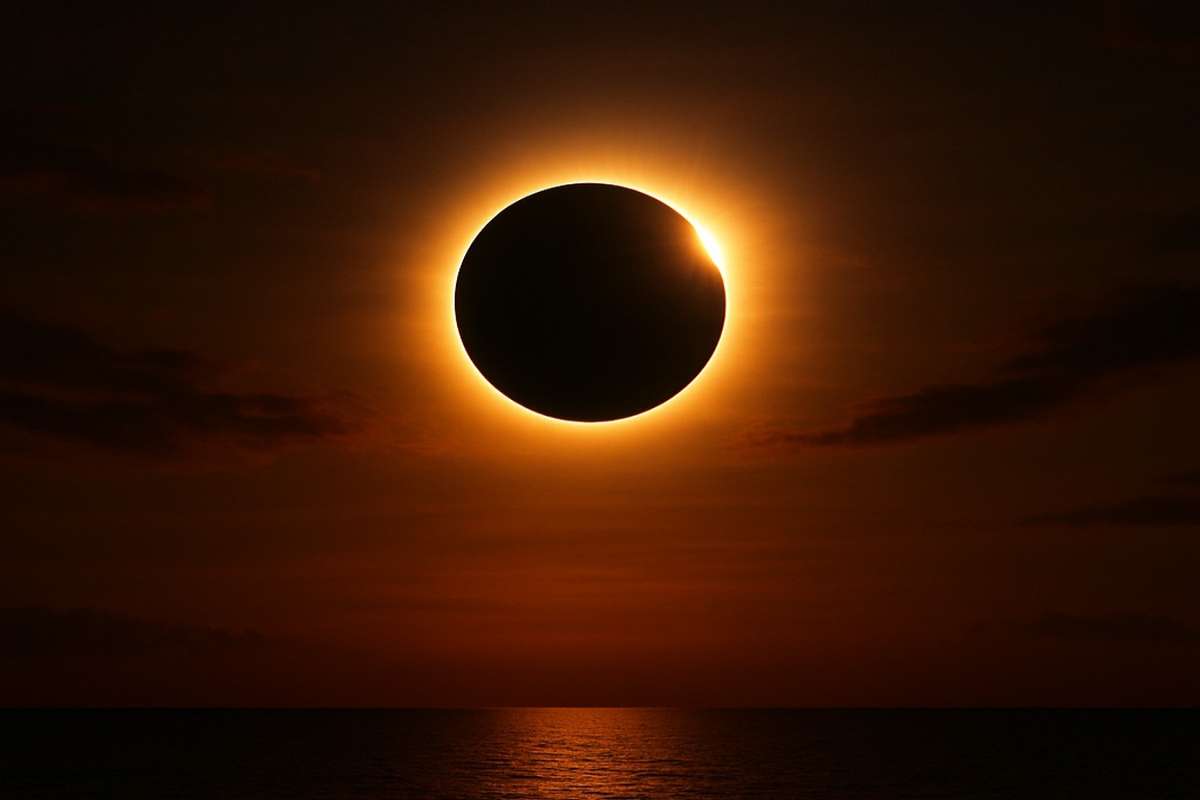
Total solar eclipse in Palma: an August evening like no other
Every summer, Palma gives locals and visitors plenty of reasons to be out on the streets at dusk, but on 12 August 2026 the city has a different kind of appointment with the sky. That evening, a total solar eclipse will sweep across the Mediterranean, and Mallorca will be one of the last places in Spain — and in Europe — where it can still be seen before the sun disappears below the horizon.
According to timeanddate.com, the eclipse will begin over Palma at 7:38 pm, reach its maximum around 8:31 pm, and end close to sunset, around 8:49 pm. Totality — the moment the Moon fully covers the solar disc — will last a mere 96 seconds: long enough for the sky to darken suddenly, the temperature to drop, and the solar corona to become visible to the naked eye.
A phenomenon that needs a clear horizon
There's an important detail for anyone planning to watch from the front row: at the moment of totality, the sun will sit just 2 degrees above the horizon, almost grazing the sea. Any building, hill or obstacle to the west can block the spectacle right at its most decisive instant. Palma will also be among the last places in Spain to witness the eclipse that evening, which adds an extra reason to experience it right in the city rather than heading out to the coast.
Watching it properly, then, calls for height and an open, sea-facing western horizon. In the heart of the old town, only a handful of places offer that: rooftops that look directly out over the bay with nothing standing in the way.
An urban vantage point in La Calatrava
The Es Princep rooftop, ALMAQ, looks out precisely over Palma Bay and the Cathedral from the top of the Calatrava neighbourhood, with an 800 m² terrace and an unobstructed view towards the water. It's a space designed around watching the sun go down over the sea — as we've written before in our guide to Palma's best rooftops — and that same orientation makes an urban rooftop a strong candidate for an eclipse that plays out precisely as the sun touches the water.
That said, a note of caution: as this is an exceptional event, last-minute capacity limits or access restrictions may be announced at various spots around the city in the days beforehand, so it's worth checking directly with each venue on the day itself that access is confirmed and that the western horizon is genuinely clear from wherever you plan to watch.
How to watch it safely
Spectacular as it is, a solar eclipse still means looking directly at the sun. Throughout every partial phase, certified eclipse glasses (ISO 12312-2) are essential — ordinary sunglasses are never safe, however dark they look. Only during the exact 96 seconds of totality is it safe to look with the naked eye; the moment the faintest sliver of sun reappears, eyes need protecting again immediately.
For most people, witnessing a total eclipse is a once-in-a-lifetime experience: it requires the Moon, the Sun and one very specific point on Earth to line up exactly, and rarely from a city as accessible as Palma. Add a drink in hand, the Cathedral lit by the setting sun, and the bay as a backdrop, and 12 August becomes one of those summer evenings Palma doesn't offer every year.
Looking for more ways to spend these summer nights in the city? Explore more of the season's cultural and culinary ideas on our blog.