Esclata-sangs: when Mallorcan autumn reaches the plate
On 24 October 1536, in Sóller, someone was reported for picking mushrooms on land that wasn’t theirs. The document survives in Sóller’s municipal archive, and the mushroom has a name: esclatasanchs. Mycologists Carles Constantino and Plàcid Pérez brought it to light in 1991 as one of the oldest written records of the species in Mallorca. Almost five centuries on, the scene feels familiar. The esclata-sang still stirs up passion, secrecy and the odd boundary dispute.
They arrive with the first autumn rains, once the pine woods are soaked and the heat finally retreats. For a few weeks they change the island’s rhythm. You notice them in bar-room conversations, on market stalls and, above all, on restaurant menus.
A mushroom that gives itself away
The name says it all. Esclata-sang literally means “blood-burst”. One cut explains why: the flesh releases a deep red, almost garnet latex that stains fingers and chopping boards alike. It is the signature of Lactarius sanguifluus, the most prized species in the Balearic Islands.
Its mainland cousin, the saffron milk cap (Lactarius deliciosus), grows here too. Islanders have traditionally called it esclata-sang foraster, the outsider. It’s a very Mallorcan touch: even among mushrooms, there is a pecking order.
It grows under pine trees on limestone soil and appears when it pleases. Everything depends on rain, temperature and a patience that seasoned foragers turn into ritual. Anyone who knows a good spot keeps it to themselves. Even from family.
From pine wood to plate
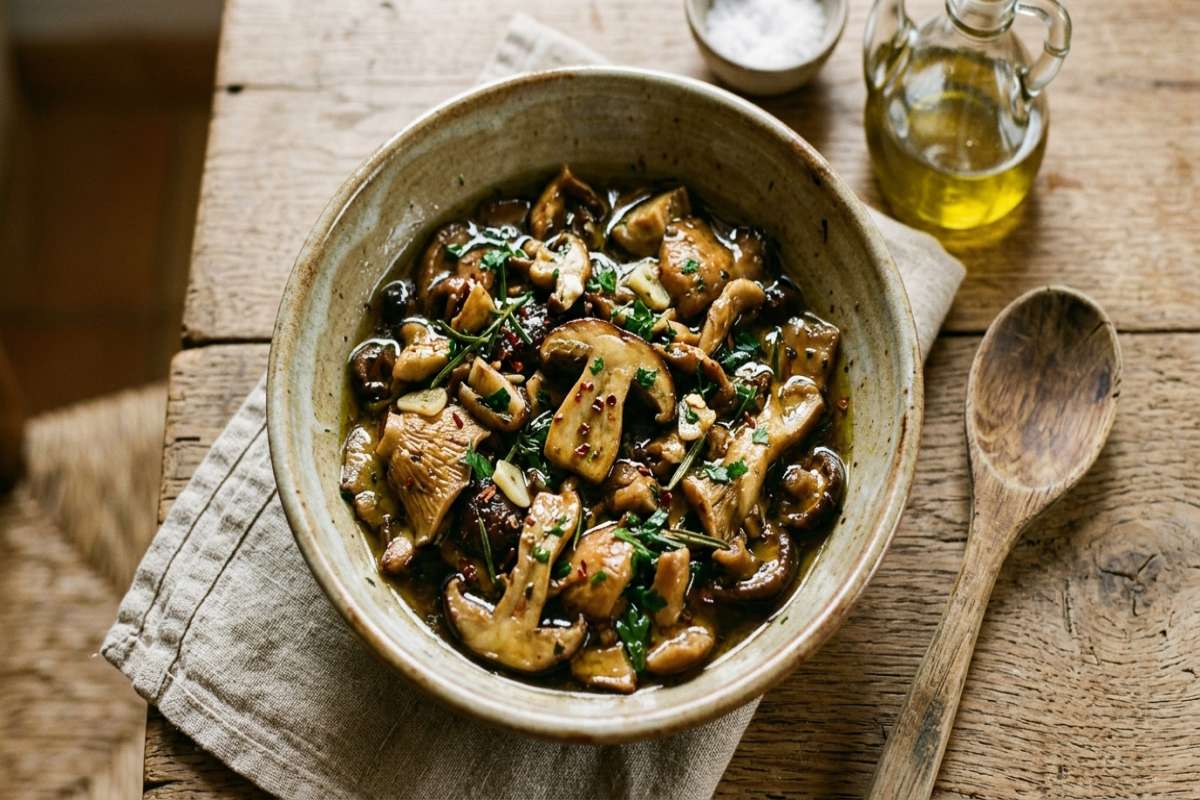
Mallorcan cooking treats the esclata-sang with respect, which here means few ingredients. The purest version is grilled over embers or on the griddle: a drizzle of olive oil, salt and, at the very end, chopped garlic and parsley. Nothing else. The texture is firm, almost meaty, and the flavour carries a woodland depth that needs no disguise.
Then come the heartier dishes. There are esclata-sangs sautéed with garlic and a splash of white wine in an earthenware pot. They go into game stews with partridge or rabbit. And they belong in arròs brut, the brothy, spiced rice that signals the colder months in Mallorca, where the mushrooms bring depth and aroma.
Chefs always repeat one rule: never soak them. Clean them one by one with a cloth or brush, because water steals both flavour and texture.
To go with them, a red made from Manto Negro needs no explanation. The grape and the mushroom share a landscape at the foot of the Serra de Tramuntana, and the Binissalem wineries are half an hour from Palma.
Tasting them without leaving Palma
For anyone staying in the city, the sensible way to enjoy esclata-sangs isn’t heading into the hills. It’s pulling up a chair. In season they appear on the chalkboards of Mallorcan restaurants and on the stalls of the municipal markets. A foodie tip: ask where they come from. Island-grown ones are scarce and command a premium, and they aren’t always the ones on the counter.
One warning never goes amiss. Picking wild mushrooms takes real knowledge, because some toxic species are easily mistaken for edible ones. Unless you’re an expert, buying is the wiser choice.
Mancor de la Vall, capital of the esclata-sang
At the end of November, Mancor de la Vall, a small village at the foot of Puig de Massanella, devotes an entire weekend to this mushroom. The Fira de l’Esclata-sang i de la Muntanya has been held since 2003, and this year it runs on 28 and 29 November. Sunday 29 will be the main day, as the town council has confirmed.
Expect mushroom and local produce stalls, a craft market, a mycological exhibition and xeremiers, the traditional Mallorcan pipers, filling the streets. Above all, there’s the food programme, when the village’s bars and restaurants serve dishes built around esclata-sangs, from the classic frit to more creative takes. Mancor is under an hour’s drive from Palma, just right for a day trip with your appetite as a compass.
Back in the city
Autumn in Mallorca tastes of rain-soaked pine and earthenware pots. Palma slows down, the light turns golden and afternoons stretch into long lunches. If you want to keep exploring the city’s food scene, our pick of Palma’s most authentic tapas bars is a good place to start. And to end the day, there’s the bay at sunset from ALMAQ, the Es Princep rooftop.
Discover more ideas for enjoying Palma and Mallorca this autumn on our blog.