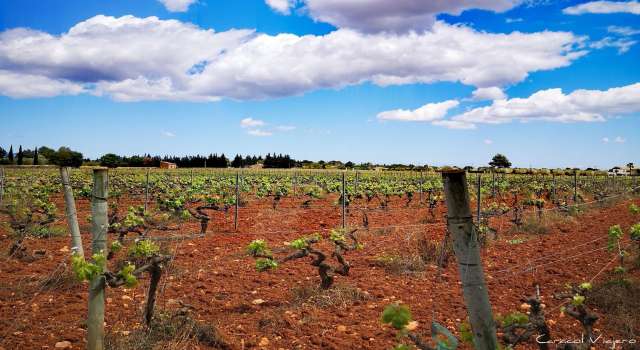
Enoturismo urbano: vinotecas y el vino mallorquín sin salir de Palma
In the late 19th century, when phylloxera devastated much of France's vineyards, Mallorca lived through its own golden age of wine, exporting what the continent could no longer produce. Fogoneu, today a near-niche variety, was then the most widely planted grape on the island. That back-and-forth — from abundance to neglect and, over the last three decades, to a quiet revival driven by a new generation of wineries — is why real wine tourism is possible today without ever leaving Palma. There's no need to rent a car or cross the Serra de Tramuntana: Mallorcan wine is tasted, bought and debated right in the old town and the neighbourhoods around it.
Two Designations of Origin on One Small Island
Mallorca holds two Designations of Origin — Binissalem, recognised in 1991 and built around the native manto negro grape, and Pla i Llevant, founded in 1999 in the east of the island and tied to the callet and fogoneu varieties — plus the Vi de la Terra de Mallorca Protected Geographical Indication, which gives producers more freedom to blend local and international varieties. The Mediterranean climate, limestone soils and proximity to the sea explain the nuances that run from Binissalem's structured reds to Pla i Llevant's more saline whites. For those who want to go deeper into specific labels and the wineries behind them, our earlier piece on the best wines of Mallorca is the place to start; here, the focus is on where to drink them without leaving the city.
The Call: Between Vinyl and Natural Wine
In Palma's former Jewish quarter, with a double entrance on Carrer de l'Argenteria and Carrer de Vidrieria, La Viniloteca pairs a selection of natural, organic and biodynamic wines — including small Mallorcan producers — with a vinyl record shop and a coin-operated jukebox that still spins. It's an unusual format, and a very Palma one, blending retro and contemporary just a short walk from Plaça Major.
Santa Catalina and Low-Intervention Wine
A little further from the historic centre, in the Santa Catalina neighbourhood, Bar La Sang opened in 2019 as a small corner shop and has since become an international reference point for natural wine on the island: publications such as Monocleand the New York Times' T Magazinehave both featured it. The Lundgren family, who run it, curate a list that changes frequently and pairs with sharing plates designed to complement the wine, not compete with it.
Sa Llotja and the Born: The Old-School Bodega
Near Passeig des Born, on Carrer de Sant Feliu, Bodega Ca'n Rigorepresents the other side of urban wine tourism: a bar with decades of history, bottles stacked to the ceiling, and a list that makes no distinction between crowd-pleasing wines and the most adventurous natural Mallorcan bottles. It opens Monday to Friday, so it's worth checking hours before a weekend visit.
Learning Before Uncorking
For those who'd rather start with the theory, La Vinoteca, near Plaça d'Espanya, has spent three decades running guided tastings with wineries from across Spain — including sessions dedicated exclusively to Mallorcan producers — and offers expert advice for anyone looking to take a specific bottle home.
Continuing the Route
For those who, after all this, want to complete the experience by leaving the city, our guide to Mallorca's wineries is not to be missed. And to pair any of these bottles with something more substantial, our round-up of Palma's best tapas restaurants — including the Es Princep rooftop — is the natural complement to this route.
Either way, the lesson is the same one the island learned in the 19th century: you don't have to go far to understand this island's wine. Sometimes it's just two or three streets away, in the old town.